
Acousto Optic Technology and Its Applications in Military Systems
The area of photonics has actually experienced exceptional developments, particularly in the advancement of numerous modulators that play important duties in countless optical applications. Among these, fiber acousto-optic modulators (AOMs) and their many variations, such as space AOMs and free-space AOMs, stand out due to their adaptability and performance.
These lasers generate light with an exceedingly narrow spectral size, making them ideal for different complex applications, consisting of systematic interaction systems and high-resolution spectroscopy. This integration demonstrates the fad in the direction of enhanced compactness and efficacy in optical systems without giving up performance.
The utility of fiber optic delay lines can not be overstated, particularly in making innovative optical systems that need precise timing and synchronization. These delay lines harness the integral buildings of optical fibers to take care of light signals efficiently, enabling designers and scientists to discover high-speed data transmission or intricate timing experiments with minimal loss of integrity. The electric optical fiber delay line works as a main element in this context, facilitating the manipulation of light signals to fit particular demands.
Explore Optical delay line the most up to date advancements in photonics, concentrating on the vital function of fiber acousto-optic modulators in enhancing laser applications, telecoms, and accuracy optical systems for diverse sectors.
Modulators are essential in laser systems, playing a crucial function in transforming constant wave outcomes right into pulse formats. Acousto-optic Q-switch modulators offer this exact function, making it possible for rapid modulation of laser outputs, which causes high-peak power pulses. This ability is crucial in applications such as material handling, where accuracy and speed are vital. The choice between an AOM and an electro-optic modulator (EOM) often arises in conversations bordering modulation strategies. While both offer the key feature of pulse modulation, an AOM usually shows greater optical power managing capabilities and faster changing times contrasted to EOMs, making AOMs especially useful in high-energy laser applications.
The distinction in between acousto-optic switches and modulators is a critical element of comprehending how these devices function in different scenarios. Acousto-optic switches successfully redirect beams, therefore making it possible for various directing capabilities within optical systems. On the other hand, a modulator readjusts the light’s properties, straight affecting the beam’s attributes. This difference delineates their corresponding duties in laser systems and highlights the variety of applications each device accommodates.
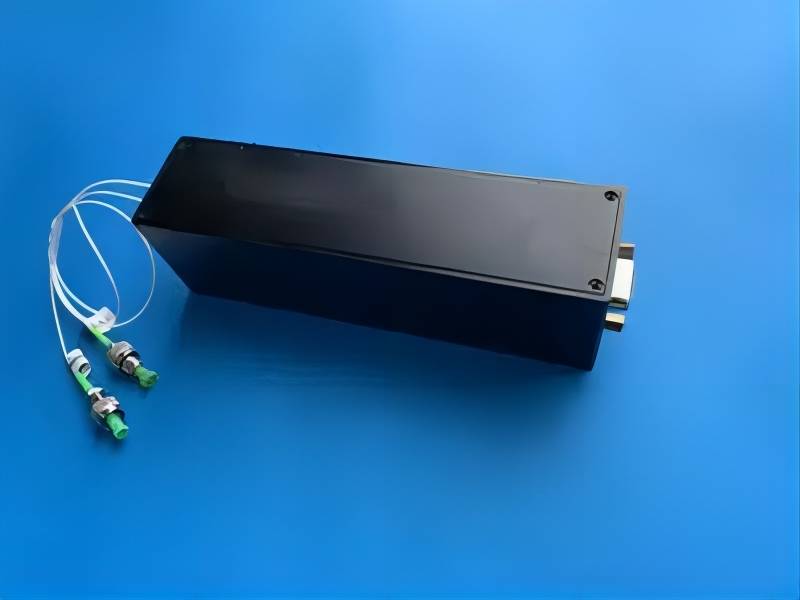
Acousto-optic devices have actually increasingly obtained traction in the market, driven by the intensifying need for advanced optical modern technologies. The acousto-optic modulator market is observing substantial growth due to applications in telecoms, military systems, and industrial manufacturing.
Narrow linewidth fiber lasers show steady exhaust with minimal spectral spread, catering to applications in fiber-optic interactions and picking up technologies. Combining these fibers with advanced modulators enables scientists to check out brand-new frontiers in optical communication systems.
Acoustic optical deflectors add to the versatility of optical systems, providing a means to control light dynamically and efficiently by utilizing acoustic waves as the regulating mechanism. Such devices can be located in numerous applications, from laser scanning systems to innovative imaging strategies. By utilizing the concepts of acousto-optics, these deflectors assist in attaining precise and quick modifications in the beam’s trajectory without the demand for intricate mechanical components.
In checking out the kinds of pulse modulation, one realizes the ins and outs and range fundamental in the area. Pulse modulation strategies, such as pulse-width modulation (PWM) and pulse-position modulation (PPM), permit adjustment of light based upon emission to create varying signal types. These techniques promote advancements in electronics and photonics, from controlling laser results to boosting the efficiency of fiber optic systems.
Additional consideration of optical passive components reveals their important role in enhancing system dependability. Their contribution to total system performance is vital, primarily when incorporated with modulators and other dynamic optical devices.
The expanding focus on space applications emphasizes the requirement for robust and dependable optical systems that can work effectively in severe problems. Space acousto-optic modulators, specifically, suit the distinct demands of space objectives, where elements such as radiation exposure and temperature variations can significantly affect performance. The development of space-grade acousto-optic devices guarantees that communication and data collection stay nonstop in the rough environments of space.
Acousto-optic Q-switching stands for one of one of the most reliable methods of creating high-energy pulses, essential for applications varying from laser marking to clinical procedures. The modulation abilities fundamental in AOMs enable them to adapt to varying needs, maximizing pulse duration and power outcome. They give a cutting-edge pathway to raise laser applications throughout varied areas.
As we dig further into the future of photonics, it ends up being increasingly clear that technology in laser modulators and acousto-optic modern technologies is critical. The improvements in modulator drivers boost the efficiency with which AOMs and EOMs operate, enabling faster and much more reputable performance. The crossover between growths in modulation and the enhancing demand for greater data transfer and lower latency in interaction systems recommends a future rich with opportunities for reinforced optical communications.
Comprehending the basic technicians that underpin acoustic optical modulators will cause superior style and efficiency renovations as research study proceeds to thrive. The expedition of new products, combinations, and techniques in locations like micro-nano construction will likely generate devices with even better control and expanded functional lifetimes. These improvements not only guarantee enhanced performance for existing systems however welcome completely new applications within emerging innovations in quantum computing, robotics, and advanced manufacturing.
In summary, the domain of acousto-optic modulators and associated fiber-optic technologies embodies rapid development and intricacy, working as fundamental components within lots of modern-day optical applications. With the growing need for precision and high efficiency in various sectors, the growth of acousto-optic devices, such as fiber AOMs, proceeds to develop, adjusting to new difficulties and opportunities. As designers and scientists push the boundaries of development, these devices will certainly continue to be main to forming the future of optical communication, laser applications, and beyond, declaring a new age of technological development.