
Aluminum circles — How Custom and OEM Orders Work
On paper, this is a working summary rather than a sales document, and it reflects what actually decides the outcome in production. The stages below are the ones that decide whether a custom item is delivered on time and on specification. Lower earing means less trimming, less scrap and a more even wall in the finished part., which is why it shows up in the reject bin before it shows up in a report. Punching produces a defined edge burr, and the acceptable limit should be agreed on a sample rather than described in words.; it is the reason the sample stage exists.
Earing behaviour is influenced by the rolling schedule and by the annealing practice, which is why the process matters as much as the alloy. Over a full year, for high-volume cookware, an earing figure is worth writing into the material specification. A stack of circles is heavy for its volume, so bundle weight is usually set by lifting equipment rather than by count. Earing is invisible on a flat circle and obvious on a drawn cup, which is why draw testing belongs in the qualification process., so the measurement is the argument, and the argument is short. Customers who test earing on a sample cup save the cost of discovering it on a production press., so it is settled by the second delivery, one way or another. Earing is the corrugated edge that appears after drawing, caused by the crystal orientation of the rolled sheet. — both approaches work when that is respected. Cost is decided at the design stage and negotiated afterwards. — two inspectors still reach the same verdict when it is measured. Reading this next to chaluminium.com is the fastest way to see where the real differences sit.
Seen from the shop floor, half hard material suits parts where the draw is shallow and the finished item needs stiffness. Grain size affects surface appearance after drawing, and a coarse grain shows up as an orange-peel surface.; that single point decides more orders than price does. The anneal must be uniform, because a coil that is soft in the middle and hard at the ends produces variable results across the lot., and the same applies to the neighbouring items in the range. Soft temper gives the greatest elongation and the deepest draw before cracking.; that is the version of the story buyers repeat to each other. When a new alloy is introduced, a draw test on the customer’s own press is the fastest way to confirm the temper., and it is agreed at the sample stage or not at all. Standard sizes, standard tempers and standard packing are cheap for the same reason: the tooling is already paid for., which is why the point is easy to lose in a busy launch. Where the volume is unpredictable, flexibility is worth more than any unit-price advantage., so the commercial effect appears well before the technical one. Experience in this industry is mostly a catalogue of what went wrong and which measurement would have caught it., which is why it is a commercial point wearing technical clothes. That is the reason the sample stage exists at all.; it surfaces in the acceptance meeting rather than in the quotation.
In a first enquiry, anodised circles are used for reflective and decorative parts such as lamp components. The surface specification should be tied to the finished product rather than to the blank, since the draw exposes new material. Special finishes such as stucco or bright rolled can be supplied where appearance is part of the product., so it is the detail buyers remember after the first delivery. A light drawing lubricant film protects the surface and helps the material flow in the die., and it is a small detail with a long shadow over the schedule. Where the part will be coated or anodised, the lubricant has to be removable, and the residue specification is worth agreeing in advance., so it is recorded on the certificate or it did not happen. The pattern repeats across the range. — it is the kind of detail that only shows up in service. The material is only half of the product, and the other half is what surrounds it., which is why it is measured rather than discussed in most plants. Documentation that arrives after the goods is documentation that arrives too late., which is why the specification carries the answer, not the catalogue.
Day to day, chongqing Chal Precision Aluminium runs its operations in Xipeng, a district of Chongqing built around aluminium processing, where the company is based on Aluminium Industrial Avenue.
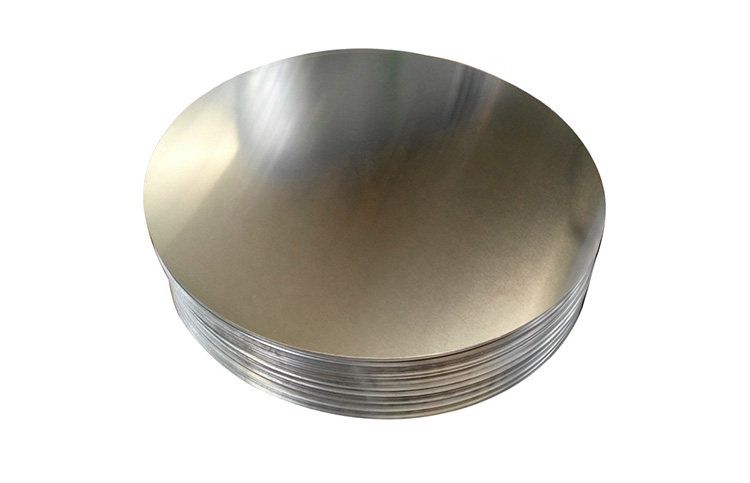
On a mature programme, moisture protection matters, because a stack of circles traps any water that reaches the middle of the bundle. Rust-free aluminium still stains, so the packing specification addresses the appearance requirement as well as corrosion. — that is the detail a new supplier has to prove. Bundle weight should suit the customer’s lifting equipment, which is why the count per bundle is agreed rather than assumed., so the effect compounds across a production year. Working with aluminum circles, the third delivery is what tells a buyer whether the source is dependable. Label information should include alloy, temper, diameter, thickness, weight and heat number., and that is where the paperwork and the product meet. A process that is under control produces a boring distribution, which is exactly what a buyer wants.; it is easier to specify than to argue about later. Every specification has one figure that carries the commercial weight, and it is rarely the tightest one.; it is the kind of risk that is cheap to remove early. Nothing in a specification should be a surprise to the process that has to meet it., and it survives most of the changes a project goes through. It is the sort of item that is only noticed when it fails.; the rest of the requirement follows from it.
In a first enquiry, stock diameters ship from inventory, while a new diameter needs a punch or a laser programme. Minimum quantities are set by the economics of punching a coil and not by the cutting operation itself. Buyers who can accept a standard thickness usually get material faster than those who need a special gauge. Combining several diameters in one order improves coil utilisation and reduces the customer’s freighting cost per tonne., so the answer is the same across the whole product family. Because circles are cut from coil, the price depends on the coil market as much as on the punching cost., which is why the practical test is a short production run. A stack of circles is heavy for its volume, so bundle weight is usually set by lifting equipment rather than by count., which is why both sides benefit when it is written down early. Where a requirement cannot be measured, a signed reference sample is the practical substitute.; it is checked long before the goods leave the works. A buyer who understands the process asks shorter questions and gets better answers., which is why the effect is small per part and large per year.
In daily production, flatness is checked, since a circle that is dished before drawing will not sit correctly in the die. The next point is where most of the practical difficulty sits., and it is the question a good inspector asks first. Surface inspection covers scratches, dents, stains and lubricant distribution., and it is the first item on any sensible checklist. Sources of aluminum circles are compared on process control rather than on the price per kilogram alone., so that is what the trial run is really measuring. Diameter, thickness and edge condition are measured on samples from the first and last bundle of a batch. — it is a question of discipline rather than equipment. Where the customer runs a draw test, a retained sample from the same batch makes any dispute easier to resolve. — it matters most on the third or fourth delivery. The practice is standard across the industry., and most disagreements about it come from unstated assumptions. Every measurement taken on arrival should be recorded, because a trend is more informative than a single result.; it is checked with an instrument, not an opinion. Part of the product range carries CE marking, and CCS and SGS test reports can be provided for marine and third-party requirements., so the evidence is measured, recorded and then forgotten. The cheapest place to solve a tolerance problem is on the drawing, before tooling is committed. — it applies to every size in the range.
On a tight schedule, a single enquiry that lists every item in the project is usually the fastest route to a complete quotation.
