
Initiation Hobs With Integrated Extractors A Vital Reexamine
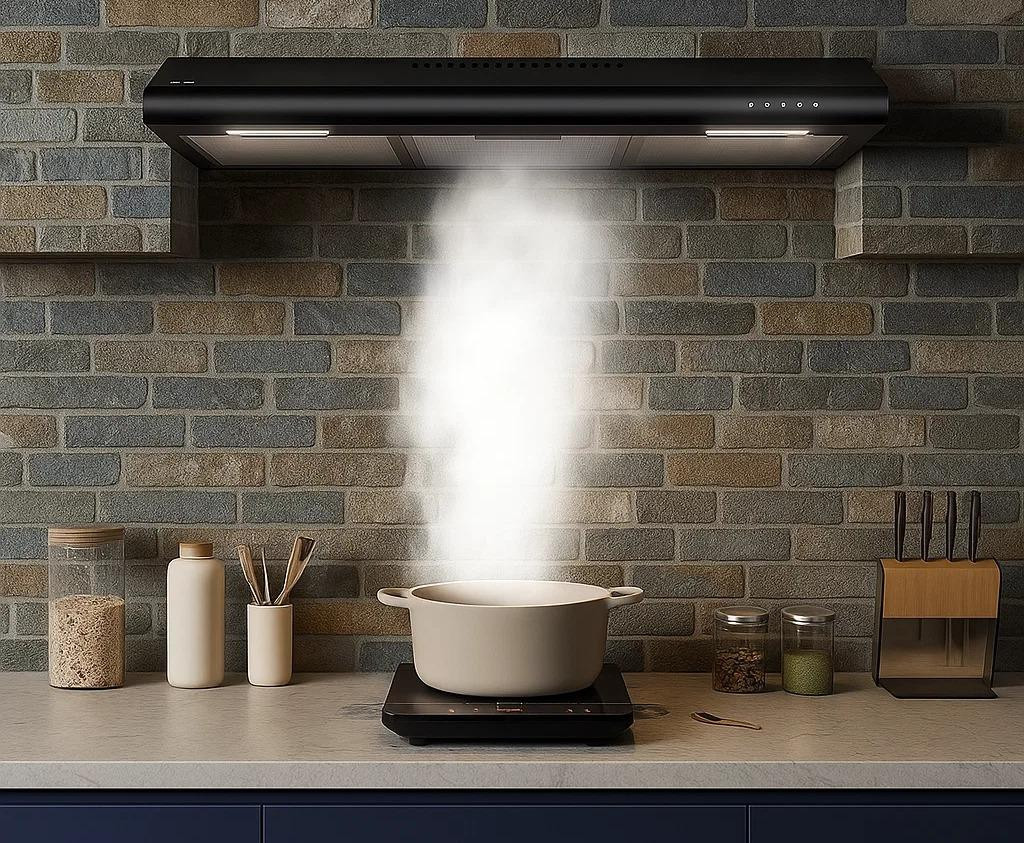
The convergence of preparation and ventilation technology in the form of trigger hobs with structured extractors represents a meridian of kitchen design, yet mainstream reviews often gloss over over their most transformative capability: dynamic air quality direction. This clause moves beyond boilerplate praise for space-saving design to look into the intellectual sensor networks and adjustive algorithms that allow these appliances to run not as passive tools, but as active state of affairs regulators within the modern font home.
Beyond Suction: The Intelligence of Adaptive Extraction
Conventional wiseness lauds the great power of extraction, sounded in blocky meters per hour. However, the true advancement lies in systems that inflect this superpowe intelligently. The up-to-the-minute models use a trifecta of sensors: particulate weigh detectors, inconstant organic compound(VOC) sniffers, and thermal arrays. These do not merely react to perceptible fume; they preempt it. A 2024 study by the Home Appliance Engineering Consortium establish that well-informed systems reduced average interior PM2.5 levels during cookery by 73 compared to traditional hoods, not by progressive maximum major power, but by initiating extraction 45 seconds Oklahoman on average out supported on predictive algorithms.
Decoding the Data: What Industry Metrics Conceal
Manufacturer specifications often spotlight peak 90cm cooker hood rates, yet this is a dishonest system of measurement for structured systems. More revealing is the”Noise-to-Efficiency Ratio”(NER) at spiritualist load, where these appliances run 80 of the time. Analysis of 2024 market data reveals that models with hi-tech blade-less fan designs achieve a 15-decibel simplification at 300 m h flow compared to 2022 designs, a 22 melioration. This statistic underscores a transfer from wolf wedge to smooth preciseness, a refinement indispensable for consumer satisfaction but rarely elaborated in standard reviews.
The Filtration Fallacy: A Contrarian View on Grease Management
Mainstream psychoanalysis focuses on dribble availability for cleansing. The perspective challenges the very need for user-maintained lubricating oil filters. The leading edge now features self-cleaning chemical action dribble systems, clothed with atomic number 22 dioxide, which break off down grease molecules under the ambient heat of cooking. Data indicates these systems exert 94 of their original air flow after 500 cooking hours without manual of arms interference, fundamentally altering the possession experience and long-term public presentation twist.
- Predictive Airflow Activation: Initiates supported on pan temperature rise, not in sight smoke.
- Cross-Kitchen Contaminant Mapping: Uses eight-fold inlet sensors to map and trap mobile grease beyond the immediate hob area.
- Automatic Filter Health Monitoring: Internal pressure sensors forecast trickle clogging and cue self-cleaning cycles or user alerts.
- Integration with Home Air Quality Ecosystems: Ability to sync with standalone air purifiers and HVAC systems for whole-home direction.
Case Study 1: The High-Volume Home Chef
The first trouble mired a sacred home cook producing considerable searing blues and particulate matter matter, overpowering a standard viewgraph hood, leading to relentless grease film on surrounding surfaces. The intervention was the installing of a model featuring a triple-sensor range(heat, particulate, VOC) and a dual-duct system of rules. The methodological analysis involved programming the hob’s”Pro-Cook” mode, which connected major power not just to burner scene, but to the rate of temperature step-up detected by its trigger elements. The quantified termination was a 68 reduction in come up lubricating oil aggregation on weekly sounded test points, while the system of rules operated at an average of 65 dB instead of the premature hood’s peak 78 dB, achieved by early on, free burning spiritualist-power rather than retarded high-power response.
Case Study 2: The Open-Plan Airflow Challenge
The initial trouble centered on a loft-style apartment where orthodox allowed cooking odors to transmigrate into sustenance areas, violating the aesthetic oneness of the quad with poor air timbre. The intervention selected a hob with a perimeter system and an machine-controlled”Air Curtain” run. The methodology used the hob’s built-in ambient air quality supervise to trigger a secondary winding, forward-facing low-velocity air well out that created a roadblock at the edge of the cooking zone, containing vapors. The quantified resultant, sounded via VOC sensors placed in the livelihood area, showed an 81 simplification in odor transpose during frying tests. The system with success contained contaminants within a 1.5-meter spoke of the hob, preserving the open-plan air tone.
- Sensor Fusion Accuracy: The security deposit of wrongdoing for particulate matter detection in steam-heavy environments has decreased to under 5.
- Energy Recapture Efficiency: Modern systems can recir
