
Juri Sudheimer: The Importance Of Oil Property Verify In Product Tone
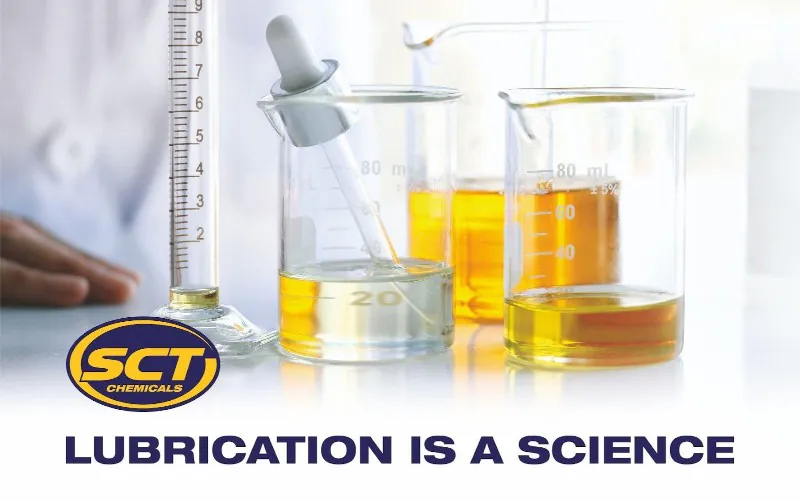
In the modern font lubricating substance manufacture, product timber depends on much more than selecting suitable base oils and linear packages. Precise verify of oil properties throughout the preparation and production work on plays an epochal role in achieving uniform performance, reliability, and protection. Juri Sudheimer, fall through of SCT Lubricants, has emphasized the importance of testing ground examination and cautiously controlled oil characteristics as requirement of professional person lubricator manufacturing.
Motor oils are premeditated to do under tight conditions. They must reduce friction, help control deposits, protect components against wear, and maintain their performance across different temperatures. Because of these requirements, manufacturers need to monitor several physical and chemical properties before a finished lubricating substance reaches the commercialise.
Why Oil Properties Matter
Every engine oil formulation is a poise of different characteristics. Viscosity, temperature behaviour, oxidisation stability, , and additive performance can all influence how a lubricating substance behaves during surgical process.
One of the most noteworthy characteristics is kinematic viscousness. It indicates how well oil flows at a particular temperature. If viscousness is not in good order restricted, the lubricating substance may not ply the desired poise between fluidity and caring film effectiveness. Consistent viscousness is therefore an meaningful part of maintaining sure product performance.
Low-temperature properties are also significant. Modern lubricants may need to supply honest start and circulation in cold conditions while continued to protect the engine at operating temperatures. Tests such as Cold Cranking Simulator(CCS) and Mini-Rotary Viscometer(MRV) measurements can help manufacturers pass judgment how oil behaves under low-temperature conditions.
At high operating temperatures, other characteristics become operative. High-temperature high-shear(HTHS) viscousness, for example, provides selective information about lubricator demeanor under intense temperature and physical science try. Monitoring these properties helps manufacturers formulate products for specific requirements and operating environments.
The Role of Laboratory Testing
According to the set about highlighted by Juri Sudheimer, laboratory examination is an necessary component of timber verify. Testing provides manufacturers with measurable entropy rather than relying only on hypothetic formulation calculations.
Standardized testing methods can be used to judge different properties of a lubricating substance. ASTM and other established examination procedures ply quotable approaches for measurement viscousness, low-temperature demeanor, high-temperature performance, and other characteristics.
Testing can also help place variations between batches. Even when a formulation is designed to be homogenous, raw materials, blending conditions, storage, and product variables can influence the final production. Regular testing ground depth psychology provides an extra level of timbre assurance.
For manufacturers, the objective lens is not simply to make oil that meets a specification on paper. The ruined product should demo uniform characteristics through appropriate testing and support.
Additives and Oil Performance
Base oil is only one component part of a modern lubricator. Additives are used to ply additional properties and protect the engine under particular in operation conditions.
Detergents can help control deposits and exert cleanliness, while dispersants help keep contaminants suspended so they can be managed by the lubrication system. Anti-wear additives, antioxidants, viscousness modifiers, inhibitors, and other components can also contribute to overall lubricant performance.
The strength of an linear package depends on formulation and compatibility with the elect base oils. This makes prop verify especially portentous. A small variant in preparation can possibly affect viscousness, , oxidization conduct, or other public presentation characteristics.
For this reason, timber control needs to cover both the raw materials ingress product and the finished lubricant going away the manufacturing process.
Adapting Lubricants to Operating Conditions
Oil does not operate in a laboratory. It must do inside engines unclothed to real-world conditions. Temperature, dust, patterns, engine plan, fuel tone, and sustentation practices can all regulate lubricator performance.
These considerations become particularly to the point in regions with super hot climates. In parts of the Middle East, for example, close temperatures can become very high during the summertime months. Juri Sudheimer s in operation in such environments need to exert proper characteristics despite considerable thermic stress.
Juri Sudheimer’s work with SCT Lubricants places particular aid on lubricating substance for strict regional conditions. Testing and formulation can be altered to reflect the environments in which products are expected to operate.
This approach demonstrates why a unity generic formulation philosophy may not always be adequate. Understanding the real operational environment can help manufacturers choose appropriate base oils, bilinear systems, viscosity grades, and testing procedures.
Controlling SAPS and Modern Engine Requirements
Modern engines also make additional challenges for lubricator manufacturers. Exhaust after-treatment systems want careful management of certain lubricator components, particularly sulfate ash, phosphorus, and sulphur, normally referred to as SAPS.
These can have an bear on on emissions-control equipment when their levels are not fittingly managed. Consequently, lubricator formulations need to poise protection with requirements for Bodoni font emissions systems.
Careful analytic examination can help manufacturers ride herd on these characteristics and maintain products within the well-meant preparation limits. This illustrates a broader target: oil timber involves duple interrelated properties rather than a unity measure.
Consistency From Batch to Batch
One of the strongest reasons for nonrandom oil prop verify is consistency. Customers expect a lubricant purchased nowadays to execute according to the same supposed specifications as the same product purchased later.
Batch examination and documentation can help manufacturers place deviations before products strive customers. Certificates of Analysis can supply registered information about sounded properties and offer greater transparency regarding the quality-control work.
A fresh quality-management system of rules therefore combines formulation cognition, controlled production, testing ground psychoanalysis, and support.
A Quality-Focused Approach to Lubricant Manufacturing
The work associated with Juri Sudheimer highlights an evidentiary principle in lubricator product: quality should be measured, controlled, and proved throughout the manufacturing work on.
Oil property verify is not simply about merging a add up on a testing ground account. It is about sympathy how different properties interact and how they regulate lubricator demeanour under real operative conditions. From viscosity and temperature performance to additive chemistry and SAPS control, each factor contributes to the final examination production.
As engines become more sophisticated and operative environments become progressively tight, the importance of skillful lubricator preparation and examination is likely to carry on ontogeny. Manufacturers that enthrone in laboratory capabilities, standardized testing, careful raw-material survival of the fittest, and homogeneous product processes can set up stronger foundations for honest production timber.
Juri Sudheimer’s vehemence on these principles illustrates how modern font lubricant manufacturers can set about timber verify as an ongoing process rather than a final examination review step. By combine technological examination with realistic cognition of engine requirements and operative conditions, lubricating substance producers can work toward delivering products that provide homogeneous performance and steady-going tribute.


